chun518918@163.com




Jan 5,2026
Bulk procurement is always about low-cost supply, consistent quality, additional features, and lots of benefits. When we talk about bulk procurement of tea, whether it is for an eatery or for a corporation, every buyer wants to have maximum benefits. The price matters a lot because each penny is considered crucial in the procurement process. Enshi Chunming is a wholesaler who has a budget-friendly supply of tea that is not ordinary but a special one. Some might not call it special, but some might do. It is all about the perception, and Enshi Chunming does its best to capture the maximum market through wholesale supply. Businesses that want to procure that low-cost and soothing tea, there are a few things to know. Once they know them, they will realize how advantageous Enshi Chunming could be for them. Lower Prices Than Many Sources Tea is among the most consumed beverages in the world, and countries look for massive procurement. Many consumers prefer green tea, especially those in the Asia Pacific region and health-conscious ones worldwide. Enshi Chunming offers a bulk supply of fresh and healthy tea for all the global markets. What’s best about it is the price difference from many other sources. Enshi Chunming offers a much lower price than one can expect. As a result, tea procurement becomes a much more convenient and budget-friendly process for all. Buyers only need to choose us for that, and the rest is on us. Our wholesale prices are what highlight us in the green tea industry. Lots of companies that deal in the retail sector need a wholesaler who could supply low-cost green tea. Those companies can contact Enshi Chunming to get lower prices, mega supply, and timely distribution. Flavor Varieties at the Same Low Price It is a bonus for retailers when they find a supplier who has low prices as well as varieties. Enshi Chunming is that kind of supplier because it has two main types of tea, along with sub-flavors. One is black tea, and the other is green tea. Green tea is known for being available in countless flavors, and we provide such a massive variety. Mega Offerings for Commercial Buyers Commercial buyers like cafes, restaurants, and hotels need a wide variety of green tea to meet maximum customer satisfaction. They need someone who can offer such a massive flavor range, and Enshi Chunming can do that. Buyers might assume that a wide range of flavor offerings could increase the price, but it is not like that. A wholesaler like Enshi Chunming has low-cost benefits for its customers because the price range it offers is very low. Whether a buyer procures multiple flavors of green tea, a single flavor, or black tea in bulk, the price range remains low for all. Maintaining Your Buffer Stock Against Sudden Shortage Partnering with a wholesaler who has a mega supply benefits in many ways. One of them is the buffer quantities that buyers get from them. These buffer quantities prevent stock shortages for retailers, commercial consumers, and even for corporations. The advantage of procuring bulk green tea from Enshi Chunming is saving oneself from sudden embarrassment. No café, hotel, or restaurant wants to face a sudden shortage of tea, especially in peak seasons. The same is for event management firms that need bulk tea supply, and they also need buffer stocks. Enshi Chunming can supply massive stocks of tea to all its customers with consistent quality. Cost-Effective Gifting Option for Corporations Corporations need gifts for their employees on special occasions. Countries in the Asia-Pacific region prefer tea gifts because of their traditional adherence to tea. Lots of cultures and regions have corporations that need customized tea boxes. They need those tea boxes with various flavors, attractive packaging, and decent overall appearance. Enshi Chunming has a cost-effective supply of green and black tea for such corporations. Therefore, corporations that have hundreds of employees know how to make them feel good with these extrinsic gestures. Even with additional customizations, the cost doesn’t rise much. It appears like a way better option because more features at a lower cost feel good to all corporations. Custom Packaging, Flavors, and Sizes at the Same Low Cost Customization is the need for all businesses that want to offer something special. Even in green tea, many businesses want to procure custom tea gift boxes for their customers and employees. It shows the importance of special themes for each season or campaign that companies want. The custom packaging matters a lot. For instance, if a restaurant’s theme is red and black, they would want their tea gift boxes to have the same theme. It is called brand identity that does the precise positioning in customers’ minds. Enshi Chunming also offers custom colors, sizes, designs, inserts, and flavors in its custom tea gift boxes. It includes packaging containers like bottles, tins, and sachets, depending on customers’ demands. Therefore, we offer a wide range of options to customers who want to impress their clients and employees at special events. It could be birthdays, festivals, or other special days that make corporations give something to their loyal customers. Higher Benefits at lower Cost There is one thing that you need to know, and that is about the benefits of green tea. Enshi Chunming chooses traditional Chinese herbs in the production of its standard and custom teas. Both offer a wide range of benefits for the mind, heart, and the rest of the essential organs of the body. Since green tea helps control blood pressure, blood sugar, and stress, people combine it with healthy activities. The green tea we supply does the same to its consumers. Whether people consume it regularly or occasionally, green tea shows its results. It helps release toxins from the body and increase brain functions for better focus and alertness. Even our black tea offers may have similar results in the form of alertness and focus. Also, green tea has positive effects on skin health. Many people like to consume it to reduce bad cholesterol and excessive weight. Although an intense workout, a strict diet, and a healthy routine have to be combined with green tea for positive results. Enshi Chunming can help people achieve their health goals by supplying green tea in bulk to retailers. Conclusion Enshi Chunming is a wholesaler who can offer a budget-friendly solution to tea retailers and commercial consumers. Restaurants, hotels, cafes, corporations, and retailers need a low-priced supply of healthy green tea. They can also get an additional advantage in the form of customization, especially if they want tea gift boxes. Event management firms and corporations desperately need such custom boxes, and all of them can get budget-friendly supplies from Enshi Chunming
Jan 5,2026
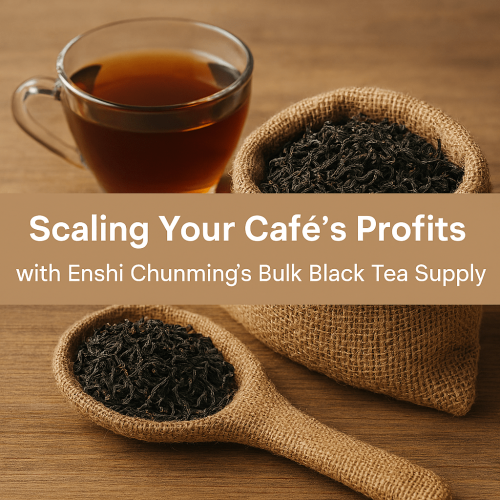
Tea is not coffee, and if that statement sounds obvious, then it is not. Most cafe operators build their entire margin model around espresso, then treat tea as just a line item, and a menu filler. That approach is wrong. Black tea, purchased correctly and positioned strategically, can become a genuine profit item. As a restaurant owner, when you slow down and consider the costing and revenues model of such positioning of black tea you will begin to understand. Coffee demands expensive equipment, trained baristas, and beans that degrade quickly after roasting. Tea in contrast, just needs hot water, time, and consistency. The cost of input per cup of quality black tea is often dramatically lower than espresso. The perceived value to the customer can be equal or higher, depending on how you present the tea. That gap between your cost and their perception is where margin lives. But here is where most cafe owners fail. They buy tea the way they buy napkins. Whoever is cheapest and whatever arrives fastest. The whole approach is careless and without any vision. No relationship and no understanding of what bulk purchasing can actually unlock. Why Bulk Black Tea Changes the Revenue Model Retail tea purchasing, usually packaged in small tins and sachets from broadline distributors, can weigh heavily on the pocket. You pay for packaging. You pay for branding. You pay for the middleman's margin and the middleman's middleman. By the time that tea reaches your cafe, the price per gram has multiplied several times. Bulk purchasing eliminates these added costs. You buy in volume, and you eliminate the decorative tin packaging cost and the retail shelf markup. What remains is tea and a dramatically improved cost-per-serving. Consider the costing. To illustrate, let’s suppose a premium retail sachet might cost you $0.40 to $0.70 each. You sell it for $3.50, maybe $4.00. Your margin looks acceptable until you realize how much of that $0.40 is useless: packaging design, retail distribution, brand licensing. Now consider bulk loose-leaf black tea from a reputable supplier. Depending on origin and grade, you might pay $15 to $40 per kilogram. A standard serving uses roughly 2 to 3 grams. Your input cost thus becomes $0.03 and $0.12 per cup. The same $3.50 sale. But your margin is healthier. This is not about chasing the cheapest tea. Cheap tea will have a cheap taste and customers are bound to detect that. This is about removing inefficiency from the supply chain so you can buy better tea at a smarter price. Selecting the Right Bulk Black Tea Not all black tea fits into a bulk purchasing setup. You need varieties that hold flavor over time and tolerate storage. You also need to understand your customer base. Are they tea enthusiasts who want to know the story behind the taste? Or are they casual drinkers who want a satisfying, familiar cup only? For most cafes, a tiered approach works. One solid everyday black tea—consistent, crowd-pleasing, forgiving in preparation—anchors your volume. This is your workhorse. Assam and Ceylon varieties often fit this role well. They are robust. They stand up to milk. They taste like "tea" in the way most Western customers expect tea to taste. Then, if your target market supports it, you introduce one or two specialty options. An Enshi for customers who want brightness and complex taste that delights the taste buds. A for those who appreciate malt and depth. These specialty teas can command higher menu prices and make your cafe stand out from the shop down the street serving bagged commodity blends. But to succeed, you need patience. Bulk purchasing means commitment. You are buying kilograms, not grams. If you stock seven unknown single-origin teas and each one has a slow usage turnover, you will watch quality degrade on the shelf while your cash is stuck in inventory cycle. Your winning approach is to pick fewer selections and rotate them seasonally. Storage and Handling Techniques Bulk tea is still a perishable product that degrades when handled carelessly. External factors like light, air, heat, moisture, and strong odors are enemies. They dull flavor. They flatten the aroma. They turn your smart purchasing decision into a stale disappointment. To safeguard your tea stock, investing in proper storage is crucial. Proper storage areas include airtight containers, opaque materials or a dark storage location. Other precautions include keeping tea away from your espresso station, away from cleaning supplies, and away from anything pungent so the flavors and odors don't mix and make tea flavor seem weird. Black tea is more forgiving than green or white varieties, but forgiveness has limits. Keep an accurate track of your inventory turnover so that you have a solid knowledge about how long a kilogram lasts in your operation. If you are not using up three months of supply, you are probably sitting on quality loss. Tighten your ordering cycle and buy what you will use in four to six weeks. Staff training should be your next concern. This matters more than most owners admit. Tea brewing is simple, but for perfect brewing water temperature, steep time, and leaf quantity all play a part. Sloppy work here erases your margin advantage because customers will stop ordering tea after one mediocre experience. Supplier Relationships That Protect Your Program Bulk buying means supplier dependence. That is not a weakness if you manage it correctly. The right supplier becomes a partner who stabilizes your program and ensures batch quality across reorders. Your procurement process should be as transparent as possible. Inquire with the supplier to establish that transparency. Where does the tea originate? What grade is it? Can they provide samples? Will they guarantee consistency between shipments? Price negotiations should done on terms like payment windows, minimum order flexibility, freight arrangements, and return policies. A supplier who offers slightly higher per-kilo pricing but ships reliably and maintains clear communication proactively, all the while supplying good quality, is a lot better than a supplier that offers you the cheapest quotes and none of the other things. In resturant industry compliance can be strict and once a reputation is lost it can be hard to recover. It is your job to request documentation when it matters. Food safety certifications, organic verification and traceability records all protect you from penalties. If a customer asks where your tea comes from, you should know and you should be able to prove it. Positioning Tea as a Profit Center The final step is perception. You have fixed your supply chain. You have improved your margins. Now you must ensure customers understand that your tea program is worth their attention and their money. Menu placement matters. Descriptions matter. Staff knowledge matters. If your menu buries tea below the smoothies and your baristas shrug when asked about the Assam, you are signaling that tea is not serious. Customers will respond accordingly. Work on the serving presentation. Loose-leaf tea served in a proper pot with a timer or clear instructions communicates care. It justifies a higher price. It invites reorders. Tell the origin story, briefly. Customers do not need a lecture. They need a reason to believe this cup is worth $4.50. Train your team to recommend tea, not just accept tea orders. A confident suggestion during afternoon service, when coffee demand softens, can shift volume meaningfully. Conclusion Black tea will not replace coffee in your revenue mix and that should never be your goal as well. The goal is to stop treating tea as a passive category and start treating it as a margin opportunity. Bulk purchasing is the mechanism. Consistent quality is the promise. Intentional positioning is the multiplier. Done correctly, your tea program stops costing you money and starts making profits.

Dec 10,2025
Starting a private-label black tea business sounds romantic: artisan blends, glossy labels, storefront pop-ups, and wholesale deals with cafés. Reality? It’s supply chains, QA checklists, shelf-life math, and brand trust. Good new is that you don’t need a plantation, or a factory. Your recipe to success involves the right combination of credible suppliers, simple quality controls, and a brand that customers trust to put a teacup on their morning table. This guide walks you from first idea to your first pallet lift. Know the market and pick a narrow entry point Black tea is not one product; it’s categories and rituals. Assam, CTC for tea bags, orthodox black for loose leaf, single-origin estates, breakfast blends, flavored blacks (vanilla, bergamot), and value-priced bulk for hospitality. Don’t try to be all of them. Start by choosing one tight niche that matches your strengths and sales channel. Are you selling online premium loose-leaf? Aim for single-origin or specialty blends. Are you targeting cafés and offices? CTC or value blends with predictable pricing and consistent brews are better. Are you building a gift/retail brand? Flavored or seasonal blends sell well. Quick win: visit three local cafés and one retail grocer. Note what black teas they stock and ask what moves fastest. Real buyers tell you more than market reports. Secure a credible supplier and define specs You don’t need to grow tea. You need a reliable tea merchant, broker, or packer. Suppliers range from small estate exporters to large blending houses. Your priorities: consistent grade, traceability, sample policy, minimum order quantity (MOQ), and packaging options (bulk leaf, tea bags, sachets). Define product specs early: leaf grade, cut (CTC vs orthodox), moisture limit, packaging (foil pouch, valve bag, envelope), and net weight options. Ask for COAs (certificate of analysis) and a sample panel. Insist on repeated samples across two production batches before committing to volume. Pro tip: Pick a supplier that offers private-label packing. That simplifies logistics — they supply, blend, and pack under your brand, reducing upfront CAPEX. Calculate cost structure and set realistic pricing Margins in tea can be thin if you miss the math. Total landed cost calculations should include product cost, private-label packing, freight, customs/taxes, duty (if importing), labeling, warehousing, and fulfillment. Also add marketing, samples, and returns. Work this backwards: target retail price first. Suppose you want to sell a 100g pouch at $9.99, your wholesale and cost structure must support that while covering marketing and margins. For B2B (cafés, hotels), expect lower per-unit prices but larger volumes. Quick win: build a simple spreadsheet with unit economics. Essential items to include in the spreadsheet are: COGS, packaging, fulfillment, and target margin. If the numbers don’t give you adequate returns at your chosen price point, then make changes to the product size or distribution channel. Packaging, Labeling and Compliance Tea packaging does two jobs: protect quality and sell. Oxygen and moisture are the environmental agents that can destroy the quality. Your best defense against these are barrier pouches with degassing valves or rigid tins. Don’t underestimate the impact of product packaging information as it is vital for your market reputation and customer trust. You must include the following info on the packaging. • Ingredient declarations, • Net weight, origin, • Best-before date, • Contact info. Regulatory compliance differs by market. These can be divided into three types: label requirements, food safety certifications, and claims (e.g., “organic”) matter. If you claim organic, the supplier must provide organic certification that is traceable to the batch. In this case keeping batch records and COAs for every shipment is your safety measure against lawsuits. These documents become crucial when selling to retailers or foodservice as they are vital for customer trust. They also prove the product as genuine. Pro tip: start with plain, compliant packaging. Once you have some sales data upgrade to a better design. But your first step should be to look at initial response of the market and then go for expensive packaging option. Create a small QA process Quality control keeps buyers and prevents returns. At minimum: inspect each inbound lot for aroma, moisture, foreign matter, and flavor consistency against your reference sample. Maintain a lot log with COA, supplier batch, and packaging date. Randomly brew test incoming lots using a consistent brew profile (weight, water temp, time). If you plan tea bags, check infusion strength and dust levels. If loose leaf, check leaf size and cup clarity. For flavored blends, verify flavor intensity over time (stability). Quick win: keep a one-page QA checklist and a tasting log. If a lot fails, quarantine immediately and notify your supplier. Sales channels & launch strategy: test fast, scale smart Decide where you’ll sell first. DTC e-commerce gives control and higher margins but needs marketing. Wholesale to cafés and boutique grocers gives faster volume but lower margins and higher service demands. Start with two channels: one direct channel (your website or a marketplace) and one wholesale channel (local cafés/retailers). A winning approach is to offer small MOQ starter packs for cafes and sample kits for consumers. Host tasting events or pop-ups to collect feedback and build initial community. Pro tip: offer subscription options as tea subscriptions build predictable revenue. Branding & Storytelling Tea buyers care about origin, harvest, and story. Use honest narratives: single-estate, smallholder blends, or artisanal blender whichever fits. But don’t fabricate. Provide origin information, tasting notes, and brewing instructions. Be clear on sustainability claims and back them with supplier documents. A simple brand story paired with clean, legible packaging wins over vague buzzwords. Logistics, Warehousing and Fulfillment Basics Store tea in a cool, dry place away from strong odors. Some appropriate options available to small entrepreneurs is a rented shelf in a certified shared-kitchen or a small dry storage space. For e-commerce, go for a lean choose a fulfillment partner with small-batch capability to avoid overstocking. If importing, factor in lead times: tea crops are seasonal, and ocean freight plus customs can add weeks. Work with suppliers that maintain buffer stock or offer staggered consignments. Quick win: keep an initial safety stock equal to 4–6 weeks of expected sales to absorb lead time variability. Common Pitfalls and How To Avoid Them Mistake: Buying the cheapest leaf. Result: inconsistent flavor and returns. Avoid by insisting on repeatable samples. Mistake: Skipping COAs. Result: Regulatory issues and lost buyer trust. Always get batch documentation. Mistake: Overcomplicated packaging. Result: High upfront cost, slow turn. Start simple; iterate with sales data. Mistake: No QA process. Result: product inconsistencies that destroy early reputation. Implement the one-page checklist. First 90 days checklist (actionable) Contact three suppliers and request full samples and COAs. Finalize product spec and pack size. Order a pilot run (small MOQ). Build a landing page with pre-order option. Secure one local café or shop as a launch partner. Set aside safety stock and document QA steps. Launch small, learn fast. Conclusion Private-label black tea is a pragmatic startup play: low manufacturing complexity, global supply, and a passionate consumer base. Your edge is in supplier selection, reliable QA, and focused branding. Start tight. Validate the niche. Protect product quality. Then scale methodically.
Nov 19,2025
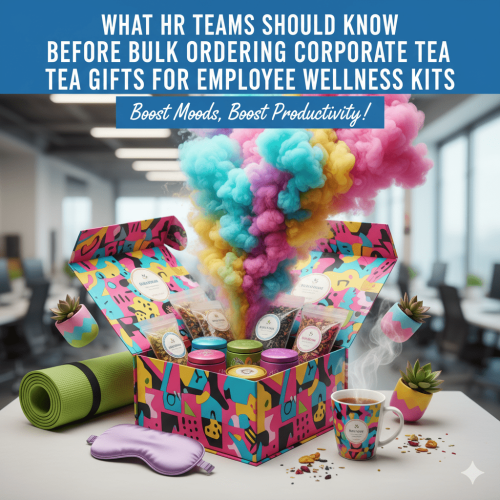
Employees need intrinsic and extrinsic motivations to keep going in their professional lives. Usually, corporations focus on extrinsic rewards for various reasons. In Asian cultures, corporations also choose tea gifts since they matter a lot to their employees. If you are also an HR team looking for impactful gifts, there is something you need to try. Tea gift boxes are among the cost-effective and highly impactful gifts many choose for their employees. Here is how you can do it, too. Decide the Type of Tea Your Employees Prefer HR teams or the procurement team must know the preferences of all the employees. That means they will have to collect data to know what kind of tea their employees prefer. Some might prefer black tea, and some will probably go for green tea. Since both are different kinds of teas, their taste and benefits differ widely. Some employees may like flavored tea because of their lifestyle and taste. In contrast, some employees might love caffeine-free tea for some reasons. However, most people prefer caffeinated tea for better performance at work. Therefore, you will need to conduct data collection on tea preferences among all employees. Then you will be able to make a precise order regarding the tea gifts for all employees. Mix Type Some employees will prefer a mix of all tea types. That means you will have to make a section of tea gifts for employees with mixed types of teas in them. That will include black tea, green tea, and even flavored tea. By the way, it seems to be a better option because it will offer variety to your employees and their immediate family members. It makes a positive gesture that you care also for their family members by offering a variety of tea gifts. This is called a complete package where you can win everyone’s heart. Customized Boxes A similar option is customized orders, which will be based on extra features. As an HR team, you can look for more value by increasing the budget. If the tea gifts are provided annually, it is better to go with customized boxes. You will probably find many suppliers available in global markets with custom tea gifts and affordable rates. Besides, it will be more impactful since custom boxes have special features that make a long-term impact. It is more like an intrinsic value you can create among the employees by distributing something special, like custom tea gifts. Ask for Documents Regarding the Health Benefits of Tea Then you need to look at some secondary factors, which are benefits. It is not just about distributing tea gifts but offering a healthy gift. When it comes to employee wellness, one has to look at every factor included in it. That means taste and aroma will only be primary factors, but brain activity and heart health are the most important factors. Since green teas are full of antioxidants, which help flush toxins from the body. It will be a great gift for all employees since they all need better heart and brain health after spending hours at work. That includes digestive health, which also depends on what kind of beverage one drinks. If it is green tea, that’s good. So, you will have to include green tea of different types and flavors in gifts to provide a holistic benefit. Packaging Style and Labeling Matter a Lot Packaging style and material affect the price of the order. If you are limited to a specific budget, you will have to ask the manufacturer for budget-friendly options. Cardboard, kraft paper, plastic, and tin are some standard materials used in the industry. Their cost also ranges from low to high because of that. Tin gift packaging is the costliest but also the most impressive and durable. If you want to make a deep impression on employees, tin will be the best choice. You will have to pay higher charges, but some manufacturers offer lower rates due to economies of scale in manufacturing. Besides, kraft paper is the most popular material companies choose for cost-effective corporate gifts. If you choose kraft tea gift packaging, it will surely be very affordable, especially for a company with hundreds of employees. Standard Style or Customization? Then, the overall elements of tea gifts are evaluated to determine if you can afford standard or custom ones. If you want to offer standard gifts, that will be good enough. However, if you want to add more value and offer impressive gifts, custom boxes are better. The only challenge they will give is the higher cost of production and a high price for you. Yet, you can explore many B2B suppliers available in the industry with a reasonable price range. Enshi Chunming Tea Trading is one of the bulk suppliers that can offer affordable deals to corporations. Especially in countries like China and Japan, corporations look for tea gifts at annual events for their employees. Whether it is a small or a large brand, companies like to offer something to their employees for a deeper connection. Ask for MOQ Details, Samples, and Bulk Discounts Here is the last thing HR teams need to consider when placing bulk orders of tea gifts. Ask for MOQs when placing orders because the cost will be affected by it. Some companies can afford only small MOQs, and they also find it difficult to find customization in those orders. Again, there are some manufacturers and suppliers available in the industry who offer low MOQs and wholesale prices. The per-unit cost is very low because they deal in economies of scale. Then the last thing you need to ask the supplier or manufacturer you connect with. The last thing is a sample because you can have an idea about the quality of tea and packaging before going for mega orders. Besides, you need to ensure the supplier has service for your country. It is an essential part of global supply because logistics costs and conditions will have to be considered. Conclusion HR teams have to ensure their employees are happy in the company, and one of the best things they can do is arrange gift boxes for them. In many countries, tea gifts are considered highly valuable because of the cultural impact and emotions attached to them. Therefore, the HR team can do a lot for its employees by at least distributing tea gifts that can soothe their minds and improve their digestive health.
Jul 4,2025
Some beverages are irreplaceable, and tea is one of them. Almost every country, especially in Asia, has a massive consumption of tea, from green to black. Since both populous nations, China and India, are located in Asia, this continent accounts for almost half of the world’s population. Commercial and residential users are the prime markets of tea suppliers, and Enshi Chunming is one of the reliable ones. If someone is looking to source tea in large quantities, a solution is available. All they need to do is read this handy guide for that. Green Tea Centuries-old green teas have been benefiting consumers worldwide. Likewise, when people try green teas of Enshi Chunming Tea Trading Co., Ltd., they will witness some specific benefits. Most benefits are common, but some have unique characteristics. However, the green tea you will find here will contribute to better health and life for all consumers. People in East Asia consume the most green tea in the world, which is also reflected in their healthy lifestyles. Consuming Enshi Chunming’s green tea can yield significant benefits for consumers. What Does This Green Tea Offer? There are numerous health benefits associated with consuming this green tea. From physical health to mental health, everything will be addressed. People who drink this tea may experience the benefits below. • It boosts antioxidants that protect against toxic elements present in the body. Free radicals will be less likely to cause damage to your cells when you consume green tea regularly. It will be like flushing the toxins regularly to keep the body healthy. • Their anti-inflammatory effects may reduce the risk of various types of cancers in the body. Cancer-causing elements might be kept at bay by this green tea. • They can help in a weight loss routine if consumed regularly. A workout, a healthy diet, and green tea can form an effective combination to help reduce body weight. • This green tea may help prevent heart disease by lowering cholesterol levels. Additionally, various types of heart problems, such as stress and anxiety, can be alleviated by this green tea. Black Tea Then there is black tea, which is common in many Asian and European countries, and its consumption rate is substantial. What makes black tea so popular is its flavor, aroma, and effects on its consumers. Billions of people in South Asia consume it, which makes it an essential commodity. Enshi Chunming also offers black tea, which will impress consumers with its authentic flavor and aroma. Whether people consume it with or without milk, the effects are soothing to both mind and body. How it affects is mentioned below. What Benefits Hide Inside It? There are definitely some strong effects on a person’s mind, which makes people go for this black tea. These effects start from mind travel throughout the body. • Black tea may improve the mood by helping consumers overcome mental and physical fatigue. • This tea has some potent effects to enhance positivity in the minds of consumers. • People consume it primarily for the purpose of refreshing their minds. Some feel more than that because they are obsessed with black tea due to its taste. • Its aromatic effects attract consumers from far away, which is why black tea has some special features. • Its strong and mild flavor can be adjusted through the quantity people choose when cooking it. The stronger one has a more powerful effect because it increases the caffeine level for higher mental focus. Tea Boxes for Events, Promotion, and Gifts In addition to traditional teas, Enshi Chunming offers tea boxes for special occasions. Some cultures prefer tea on every occasion, and even as gifts. East Asian cultures in China, Taiwan, Japan, and similar countries have a strong connection with tea. Therefore, their beverages are mainly based on various types of tea. Casual and formal events also look for gifts that incline towards Chinese traditions, and what could be better than tea boxes? Captivating Boxes with Vibrant Colors What makes these tea boxes mesmerizing is their features, like designs, colors, patterns, and structures. People like to receive gifts like that because they connect with them. Tin tea boxes or tea bags are placed inside them in multiple flavors. This is where the value addition increases. Marketing firms and event management companies frequently seek such promotional gifts, particularly in East Asia. Fancy Designs that Reflect Chinese Culture The designs on them are fancy, reflecting Chinese culture. It further strengthens the bond between people, which is why such gift boxes seem to have a more profound impact. Tea boxes from Enshi Chunming will achieve the same effect because they encompass all the necessary features, from packaging to tea benefits. A Convenient Choice for Retailers, Hotels, Cafes, and Restaurants Many Chinese-themed restaurants and cafes seek teas that can provide authentic flavor, aroma, and benefits to their customers. All these features are available in all the teas supplied by Enshi Chunming. Hotels, cafes, and retailers can find a one-stop solution for black and green tea in the form of Enshi Chunming. Budget-Friendly Price Since Enshi Chunming has an ample supply available, it offers budget-friendly rates. Businesses that want to source these Chinese teas can easily obtain discounts. Superstores, the corporate world, and other commercial users will find Enshi Chunming a reasonable solution when it comes to authentic Chinese tea. Worldwide Supply It includes a worldwide supply from the same supplier. Businesses that want to source from different countries will encounter no hurdles. As a global supplier of tea, Enshi Chunming enables businesses to procure large volumes of tea worldwide. Conclusion Since tea is an essential commodity in almost every country, consumers look for retailers for the availability of tea. At the same time, retailers and restaurants seek a supplier who can meet their substantial demands. Enshi Chunming is a supplier of green and black tea that offers authentic flavor, aroma, and color, along with numerous benefits. Procuring from this supplier will surely help businesses prosper in their tea section.
Jun 23,2025
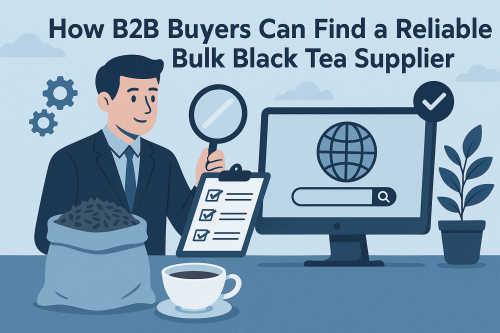
In the international tea industry, natural black tea holds a noticeable position. The credit goes to its addictive taste, health advantages, and strong market demand. For B2B buyers, whether you are a wholesaler, private label brand, café chain, or distributor. No matter whether you deal in business purchasing or a distributing, getting top-notch natural black tea from a trusted supplier is crucial. It accelerates you in the market and keeps your customers satisfied and happy. Searching for the correct exporter can be confusing. Especially when dealing with global suppliers, different quality levels, and changing supply chains. This blog will assist B2B buyers in understanding the strategy to find and work with a trustworthy bulk black tea supplier. Let's begin. Reasons to Focus on Natural Black Tea Before going into the depth of the purchasing methods, it's pivotal to understand the value of natural black tea: • Rich Black Flavor: Famous for its bold taste and fragrance. Both these things make it perfect for different blends and combinations and instant drinks. • Health Advantages: It is locked with antioxidants. Not only this, but it is also connected to mental alertness, better heart health and good digestion. • Global Demand: The Middle East, and North America are the places where tea lovers drink this tea very much. • Product Adaptability: Appropriate for loose leaves, bottled teas and tea bags. These are the factors that make black tea a successful tea all around the world. So that when one invests in it, it will be worth it. Difficulties B2B Buyers Face in Procuring Natural Black Tea While the demand for black tea is strong, the B2B buyers have to face some difficulties. They are: • Inconsistent Quality: It's not necessary that every tea label reading "natural" would be free from additives or artificial flavor. • Lack of Honesty: Some exporters become unsuccessful to provide concise origin, processing methods, or quality certifications. • Non-Trustworthy Logistics: Late deliveries or poor packaging can harm tea quality and timelines. • Hidden Costs: Import duties, minimum order quantities, and unclear pricing structures. • Communication Obstacles: Languages and time zone differences can be an obstacle in the way of communication. If you want to avoid all these challenges, find the partner you can trust. That partner should be experienced, honest, and the one who can stay with you for a long time. 1. Be Aware of What Makes a Trustworthy Exporter When examining exporters, look for a few qualities in them: Quality Standards and Certifications Reliable exporters should obey global food safety and organic standards. For instance: • USDA Organic, EU Organic, or JAS Certification • ISO 22000 / HACCP / GMP Certifications • Fairtrade or Rainforest Alliance (for ethical sourcing) • COA (Certificate of Analysis) for chemical-free and pesticide-free assurance They not only show product integrity but also make it easy to enter regulated markets. Transparent Sourcing Trustworthy exporters are honest about their supply chain: • What is the location of grown tea? (e.g., Assam, Darjeeling, Yunnan and Kenya) • How is the black tea made and stored? • Is the black tea handpicked, machine-harvested, or blended? In a nutshell, honesty promotes consistency and helps you sell black tea easily to your customers. Experience with B2B Trade Exporters with B2B expertise will understand: • Minimum order requirements • Private labeling and bulk packaging options • Import/export regulations • International shipping and customs handling Ask them their last work experience of previous B2B clients. 2. Ask Useful Questions Before Your Order To ensure you are working with a reliable and honest person, Ask them a few questions. Those questions might be: • What is your production capacity every month? • Can you give samples for quality testing? • What is your lead time for large quantity orders? • Do you give custom packaging or private labeling? • What are your payment methods? • How do you ensure freshness during shipping? Their answers will show whether they are trustworthy and professional or not. 3. Request Samples and Conduct Lab Testing Never trust an exporter without testing the tea yourself. However, a proper sample evaluation should contain: • Appearance: Overall size, clean leaves, and no dust or stems. • Aroma: Fresh, not musty or extra fragranced. • Taste: Ace in flavor, smooth, and no artificial aftertaste. • Color: A clear and amber-to-dark brown brew. For bulk orders, consider third-party lab testing for pesticide residues, metal particles, and microbial existence. It's okay to have trust issues; after all, you are going to pay a huge amount to buy it in bulk. In simple words, it's your right to check everything before placing your order. 4. Assess Communication and Customer Support Trustworthy and honest exporters understand the importance of concise and honest communication. Seek for: • Instant email responses or WhatsApp communication • Flawless English or reach to a person who speaks two languages • Clear documentation and clear interest in providing updates • Technical support for labeling, regulatory paperwork, or logistics A good exporter is a partner as well as a good vendor. So, they should make things easy for you, not harder. 5. Consider Logistics and Packaging Options Good logistics are important for maintaining product quality and meeting deadlines. Ask: • Do you use air freight, sea freight, or both? • What packaging substances do you use for large quantities of tea? • Can you give vacuum-sealed or nitrogen-flushed packs? • Are cartons labeled clearly for customs clearance? Strong logistics prevent damage during transit, minimize spoilage, and make your supply chain confident. 6. Begin with Small, then Scale. Even if you find a supplier excellent on paper, begin with a small order. That can be usually 20 to 100 kgs. This provides you a chance to: • Test quality • Evaluate delivery time • Understand documentation • Build a working relationship Once trust is built, you can reach container-level orders with more confidence. 7. Utilize Online Platforms and Trade Shows Some useful ways to find exporters are listed below: Online B2B Platforms • Alibaba • Global Sources • IndiaMART • Tradekey Examine supplier ratings, verified badges, and client reviews. For verification, always follow up through video calls. Tea Trade Fairs and Expos Events like the "World Tea Expo," SIAL, or BioFach offer face-to-face meetings with approved/confirmed exporters. Trade shows are perfect for: • Sampling multiple suppliers • Understanding market trends • Negotiating better rates 8. Work with Exporters Who Offer Private Label or OEM Services If you are launching your own brand, select exporters that offer: • Personalize labeling and design • Large quantity to retail packaging conversion • Flavor amalgamation options (for instance; black tea with cinnamon or vanilla) • Barcode, FSSAI, FDA labeling compliance This makes you able to visit the market quickly and scale efficiently without the need for separate packaging vendors. Understand Pricing Structure Ask exporters to give you a clear cost breakdown: • Cost per kilogram (FOB or CIF) • Packaging cost (bulk, pouch, tin, etc.) • Shipping cost (express vs. cargo) • Taxes or handling charges • Discount tiers based on order volume Transparency in pricing helps you guess costs and make a profitable margin. Build Healthy and Long-Term Relationships Once you have got a trustworthy bulk black tea supplier, invest in the relationship like this: • Give feedback on service and quality • Share your market plans to co-create custom blends • Find yearly contacts or volume commitments for better pricing • Make them consider that they are a team and not just vendors to you A strong supplier has several qualities. He leads to superior treatment, better payment terms, and even product innovation support. Conclusion If you want to become successful in the tea market, find a trustworthy black tea supplier. By focusing on product quality, honesty, logistics, and communication, you can build a sourcing strategy. It will minimize risk and increase profitability. So, take some time to do research and begin with something small. With the appropriate exporter, you will have a dependable supply of supreme black tea. It will make your business successful and satisfy your customers.